THE JOURNAL / COLOSSUS LUX
Sculptural Wall Art: When a Photograph Stops Being Flat
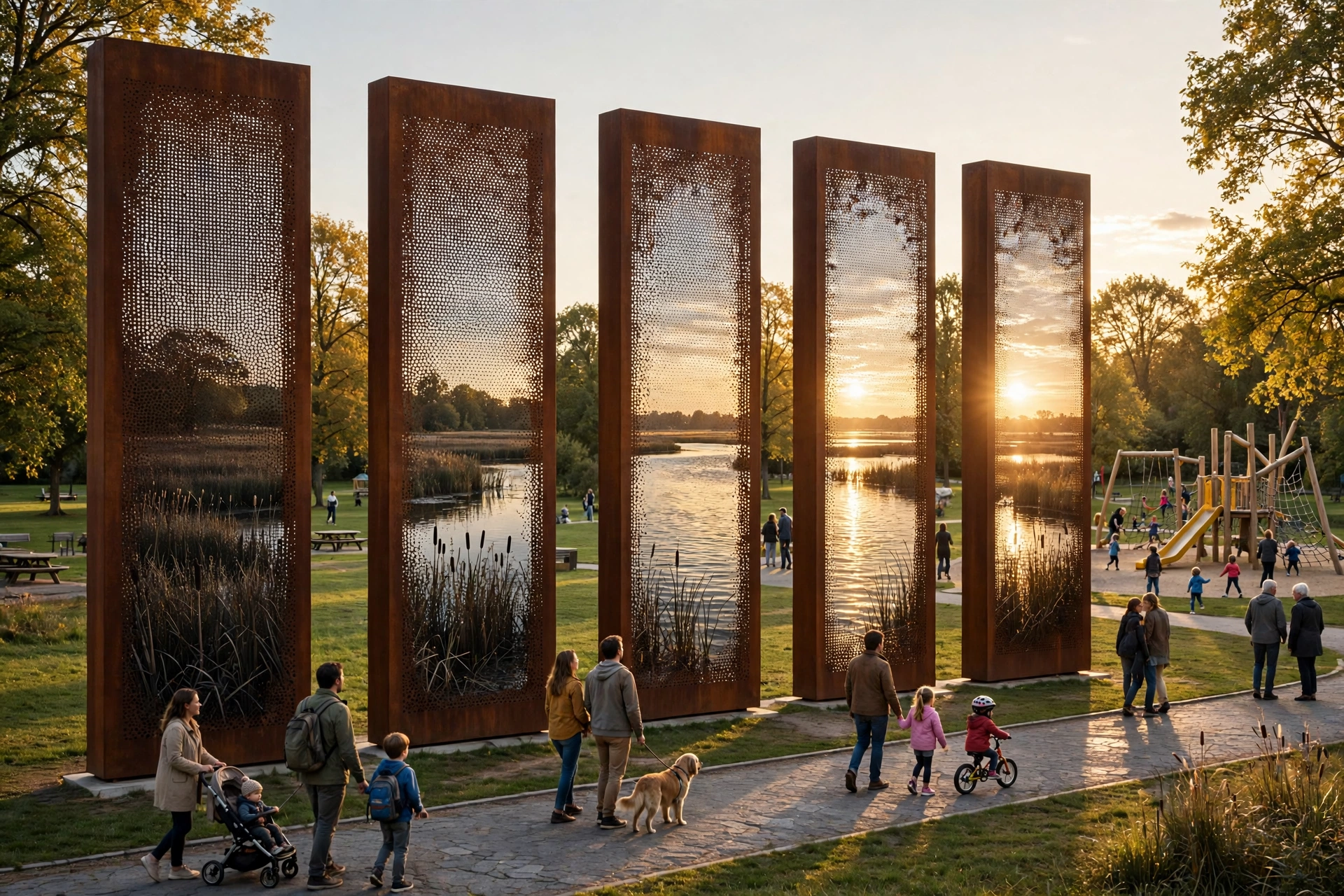
Sculptural wall art starts with a question a flat print does not ask. What should the work do to the wall, and what should the wall do to the work?
A framed photograph hangs on a surface. Sculptural wall art works with the surface. It may project from it, sit in layers above it, or use light across it to change through the day. The image is still central. In my practice the image is usually a landscape, built from hundreds of photographs stitched into a single gigapixel file. The difference is how that image is given physical form at architectural scale.
Large walls punish weak decisions. A piece that reads clearly on a phone can disappear in a lobby. Texture that looks rich up close can turn to noise from forty feet away. Sculptural treatment is not decoration added at the end. It is a way of giving a large image presence, depth, and a reason to occupy that specific place.
What sculptural wall art is, and what it is not
At one end there are shallow relief panels, where sections of an image sit at different depths. In the middle there are multi panel works, where a single scene is divided and the gaps between panels become part of the composition. At the far end there are three dimensional photographic works, where the photograph is carried on metal, glass, or built forms that stand off the wall and cast real shadows.
It is not simply a thick frame. It is not a novelty print on an unusual material. Material alone does not make a work sculptural. The test is whether the physical structure changes how the image is seen. If removing the depth, the layering, or the shadow would change nothing, the work was flat all along, just mounted on something heavy.
In sculptural photography, the photograph remains the source. A marsh at first light has a specific structure: horizontal water, vertical cordgrass, a sky that changes by the minute. Building a piece from that scene means deciding which elements should sit forward, which should recede, and where a break in the surface helps the eye travel. Those are composition decisions, made physical.
Why scale changes the decision
Most wall art is bought by the inch and chosen from a catalog. That approach breaks down when a wall is fifteen feet wide or fifty feet tall. At that size, resolution, subject, and structure have to be planned together.
This is why Colossus Lux works in gigapixel photography, stitching hundreds of photographs into single images installed at architectural scale, with prints in feet not inches. A stitched image holds detail where a single capture would soften. That detail gives the maker options. A section of the image can be carried forward on a panel without falling apart. A detail of stone, grass, or water can hold up close, while the whole scene still reads from across a room.
The Savannah Convention Center installation is the clearest example of scale in my own work. It is four permanent photographic works, each 15 feet wide by 53 feet tall, completed in March 2025, and the largest photographic artwork ever installed in Savannah. I delivered the photography and the print ready gigapixel files, and worked closely with the venue team, architects, builders, fabricators and installers. Those works are flat in form, and they taught me the lesson that shapes the sculptural work. At architectural scale, the wall is not a backdrop. It is part of the work, and every decision has to be made with the room in view.
At architectural scale, the wall is not a backdrop.
The main forms, and where each one works
Different spaces call for different structures:
- Layered panels: one image split across panels set at two or three depths. Works well in lobbies, boardrooms, and long corridors where people move past the work.
- Relief construction: selected areas of the image raised or recessed. Suited to subjects with strong structure, such as columns, dunes, or tree lines.
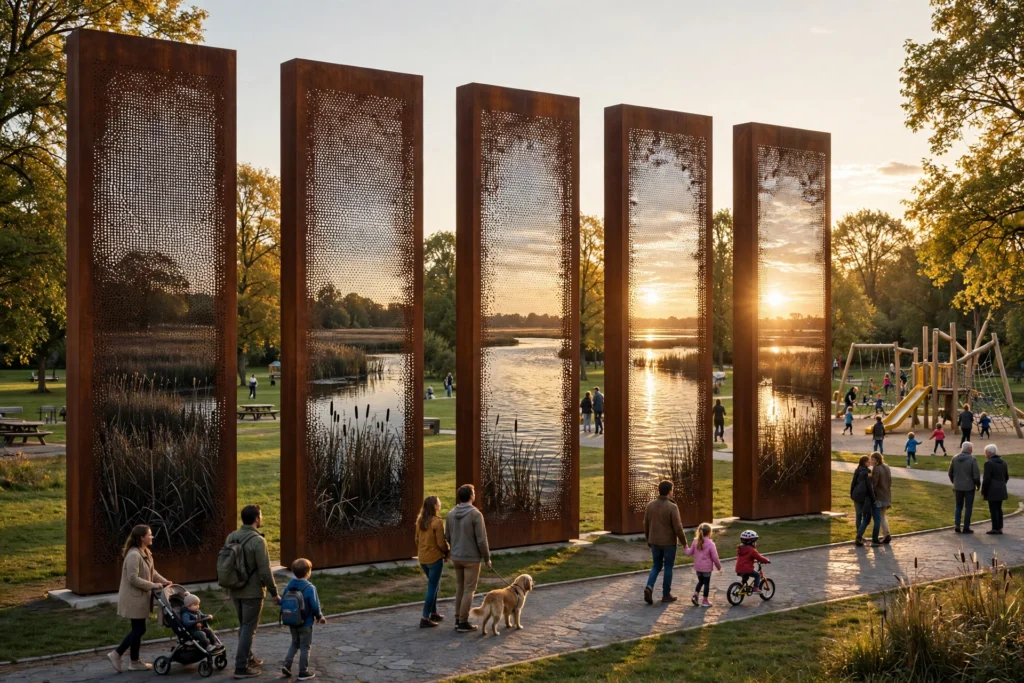
- Perforated metal: the image carried on metal with a pattern of cuts that lets light and the wall behind it enter the piece. Best where lighting can be controlled.
- Monolith forms: a photographic surface on a built form that stands off the wall as a single mass. Suited to atriums and tall walls where a framed piece would look lost.
- Wrapped or corner work: the image continues around a change in the wall plane. Effective in stairwells and transitions between spaces.
None of these is the right answer by itself. A quiet hotel corridor may need a layered landscape that rewards a slow walk. A public atrium may need a single strong form that can hold the space from a distance. Choosing the form before understanding the room is the most common mistake I see.
Light is a material, not a setting
With flat work, light is something you aim at a piece after it is hung. With sculptural work, light does part of the making.
A panel set two inches off a wall casts a shadow that moves as daylight changes. That shadow can give a marsh scene the depth the flat image only suggests. A perforated surface changes character between morning light from a window and evening light from fixtures. Gloss, matte, and brushed metal each handle that light differently, and the choice affects the image as much as color does.
For that reason, I ask about light early, before materials. Which windows face the wall. Whether the space is lit for daytime work or evening events. Whether fixtures can be adjusted. A work planned for a Metro Atlanta office will not be built the same way as a work for a sunlit Savannah lobby, even if the photograph is the same.
Site specific art: planning for one place only
Site specific art means the work is designed for a single location and would not make the same sense anywhere else. That can refer to the subject, a landscape tied to the place, or to the structure, dimensions, and light that belong to that room alone.
In practice, site specific planning is mostly measurement and patience:
- Measure the wall, the ceiling height, and the distance from which most people will first see the work.
- Photograph the room at different times of day to see how light moves across the surface.
- Study the materials already in the space: stone, wood, glass, metal, and the colors that cannot change.
- Decide what the work must do from far away, and what it should offer up close.
- Build a concept at true scale before any fabrication is discussed.
Questions to answer before you commission
- How large is the wall, and how far away will most viewers stand?
- Is the work for a public space, a workplace, or a private home?
- What light reaches the wall, and can that light be controlled?
- Does the subject need to connect to a specific place?
- Who will maintain the surface, and how will it be cleaned?
- Is there a fixed opening date the work must meet?
Honest answers to those questions will narrow the form, the material, and the budget range faster than browsing examples will. Strong subjects for this treatment usually have clear structure that survives being split into panels, and areas of contrast that can guide depth decisions. Landscapes with horizontal bands, tree lines, columns, and dune fields work well for this reason. Restraint matters too. Adding depth to every element produces a busy surface and a weaker image. In most pieces, one or two decisions carry the effect.
Continue the conversation
If you have a wall that a standard print will not hold, sculptural wall art may be the right way to approach it. Colossus Lux is the fine art practice of Vitor Lindo, based in Metro Atlanta and working in Savannah and across the Southeast. Send the dimensions of your space, a few photographs of the room, and a note about how the space is used, and we will talk through what form the work should take.