THE JOURNAL / COLOSSUS LUX
Hospitality Art Consultants: How the Decision Actually Gets Made
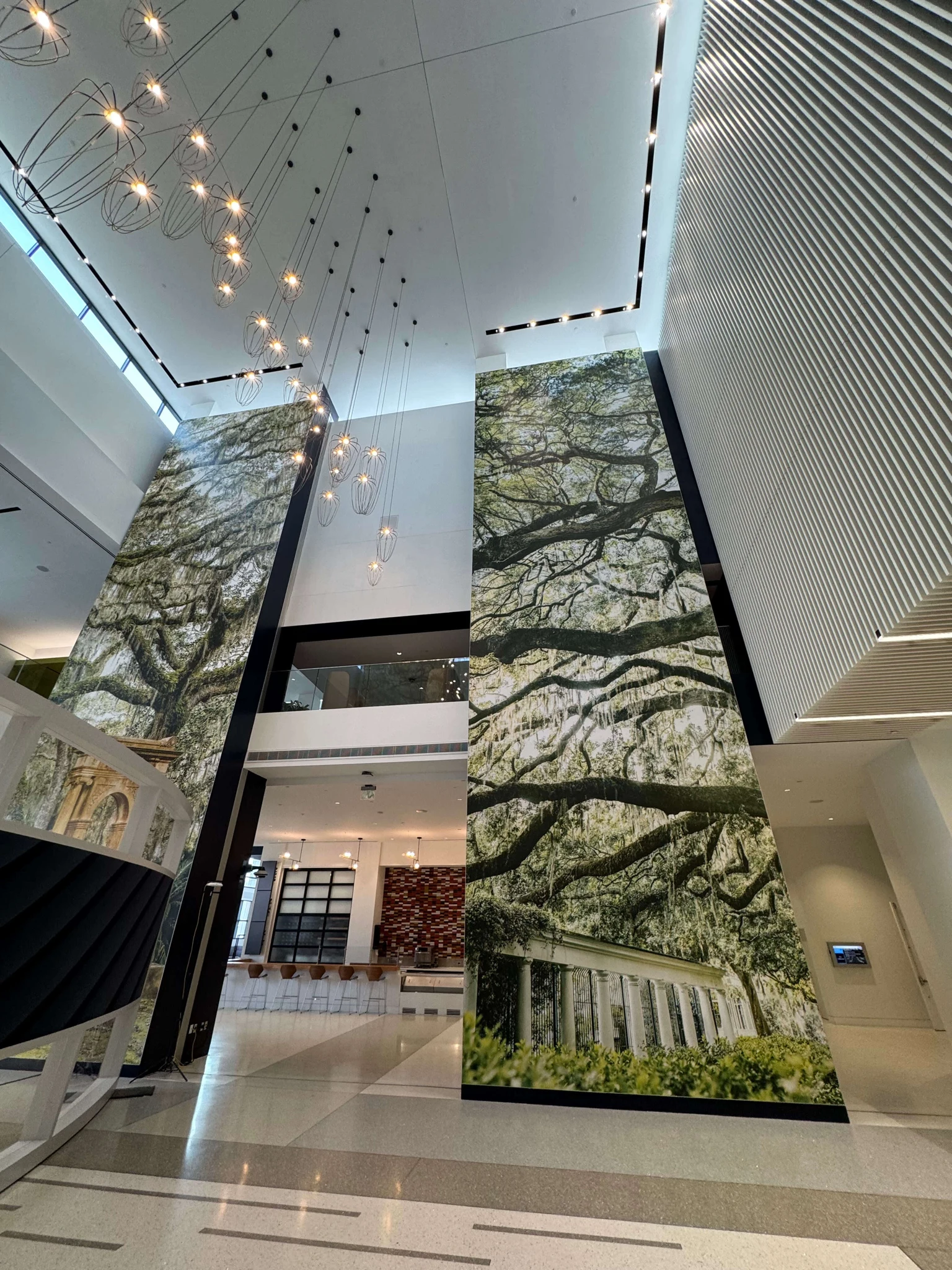
Hotels do not buy artwork the way a homeowner does. A homeowner answers to taste. A hotel answers to a brand, a budget line, a maintenance team, an opening date, and guests who will judge the room in the first thirty seconds without knowing why. Hospitality art consultants exist to hold those pressures in one place and still end with rooms that feel considered.
This post is about that decision process: who is involved, what gets decided in what order, and where projects go wrong. It is not a planning checklist for quantities and corridors. That ground is covered in our existing post on art for hotels planning, and the related procurement detail for clinical settings is in the healthcare artwork procurement checklist. This post sits before those documents, at the level of judgment.
Colossus Lux is the fine art practice of Vitor Lindo, working from Metro Atlanta and Savannah. The practice makes gigapixel photography, stitching hundreds of photographs into single images installed at architectural scale. In hospitality settings, that means a local landscape can be printed at lobby scale from a file that was made for that size.
What a hospitality art consultant actually does
The title suggests selection, choosing pictures. Selection is only part of the work.
A competent consultant also:
- Reads the property: brand position, guest profile, architecture, and the local market it competes in.
- Builds an art budget that separates feature pieces from repeatable room pieces.
- Coordinates with interior design, procurement, and the general contractor on sizes, finishes, and delivery dates.
- Specifies materials that housekeeping and maintenance can actually care for.
- Manages production, shipping, receiving, and installation sequencing.
- Keeps records of what was installed where, for replacement and future renovation.
When art consultation services are scoped well, the art package stops being a late decorative purchase and becomes part of the construction and opening plan. When they are scoped late, almost every problem that follows has the same cause: decisions were needed months earlier, and nobody owned them.
Selection is only part of the work.
The first decision: what is this property saying
Before any image is shown, a good consultant can state in one or two sentences what the property wants a guest to feel, and what local story, if any, it intends to tell.
That statement does real work. It decides whether hotel artwork should be quiet or assertive, whether local photography belongs in the lobby or only in the rooms, and whether a collection should feel consistent across floors or change as a guest moves through the building.
Hospitality art that tries to say everything usually says very little. A beachfront property in Savannah does not need desert photography in the corridor because a catalogue offered a good price. Conversely, a business hotel in Atlanta may want restrained, architectural images that support work and rest, with one strong local piece in the public space where guests actually gather.
The local question deserves care. Guests notice generic art quickly, not because they study it, but because it could be anywhere. A marsh at first light, live oaks, a real stretch of Georgia coastline: these place a property. Used with restraint, local work is one of the few art decisions guests remember and photograph.
Feature pieces and room pieces are different purchases
Experienced consultants separate the package into two kinds of work, and they budget them differently.
Feature pieces live in lobbies, atriums, restaurants, ballrooms, and elevator landings on key floors. They are large, they are seen by everyone, and they carry the visual identity of the property. This is where scale, originality, and file quality matter most. A single feature piece printed in feet, not inches, from a gigapixel file can hold a tall lobby wall in a way that a grid of small framed prints cannot.
Room pieces live in guest rooms and suites. They are repeated, they must survive luggage, cleaning, and years of turnover, and they need to work with bedding, case goods, and lighting that are already specified. Here, consistency and replaceability matter more than singularity.
Trouble starts when the two are treated as one line item. The feature budget gets spread thin across everything, the lobby gets something adequate, and no part of the property gets a piece that earns its wall.
Durability, cleaning, and safety are aesthetic decisions
In a hotel, a beautiful finish that cannot be cleaned is a poor finish. Consultants earn their fee in these unglamorous conversations:
- Can housekeeping clean the surface with the products the property already uses?
- Does the finish reflect corridor or lobby lighting into guests eyes at normal viewing angles?
- Are edges, corners, and hanging hardware safe and secure in a public space?
- Does the material meet the property requirements for public and healthcare adjacent settings where those rules apply?
- Can a damaged piece be repaired or replaced from a retained file and specification?
Photographic work has practical advantages here. It can be produced on rigid, cleanable substrates, repeated exactly from the master file, and scaled from a guest room to a lobby without changing the image. Those are production facts, and they should be discussed plainly alongside the visual ones.
Scale and the file behind the print
Art for hotels often fails on tall and wide walls because the source image was never made at that size. The design intent called for a sixteen foot piece. The file supplied could honestly support six.
The Savannah Convention Center installation is a useful reference for what planning in feet requires. It consists of four permanent photographic works, each 15 feet wide by 53 feet tall, completed March 2025, the largest photographic artwork ever installed in Savannah. Vitor Lindo delivered the photography and print ready gigapixel files and worked closely with the venue team, architects, builders, fabricators and installers.
A hotel lobby is not a convention center, and it does not need to be. The lesson transfers at a smaller scale: decide the finished size early, confirm the file can support it at close viewing distance, and get the substrate and installation method agreed before production. Our hospitality art page and the large scale page show how that thinking applies to commercial walls of different sizes.
Timeline: when art decisions need to be made
A workable sequence looks like this:
- Concept and budget: during interior design development, not after it.
- Feature piece selection and size confirmation: before final millwork and lighting are fixed around those walls.
- Production files and proofs: with enough margin for one correction round.
- Delivery and installation: sequenced with furniture, not competing with it on the same day.
Opening dates do not move for artwork. If the art package starts late, the choices narrow to whatever is in stock, and the property opens with the walls it settled for.
Cost conversations that stay honest
A clear art budget states what is included: artist fees or purchase price, licensing where it applies, printing, framing or mounting, shipping, receiving, installation, and a contingency for damage or last minute changes. Vague budgets produce the appearance of savings and the reality of change orders.
One useful discipline is to price the feature pieces first, at the size the architecture actually asks for, and then fit the room package to what remains. That order protects the spaces every guest sees. The reverse order, pricing rooms first because they are easy to count, routinely leaves the lobby underfunded.
Working with a local artist through a consultant
Consultants often mediate between a property and an artist, and that structure works well when roles are clear. The consultant owns the package, the schedule, and the property relationship. The artist owns the images, the files, and the truth about what those files can do at scale. Ask the artist direct questions early: largest installed size, file method, and substrate experience. Straight answers at that stage prevent expensive assumptions later.
Continue the conversation
If you are planning a hotel, inn, or hospitality space in Atlanta, Metro Atlanta, or Savannah, and you want to talk through feature pieces or a full art package at a practical level, contact Colossus Lux to discuss their space. An early conversation about walls, sizes, and opening dates saves the project from late, hard to fix decisions.