THE JOURNAL / COLOSSUS LUX
Large Coastal Wall Art From Real Lowcountry Places
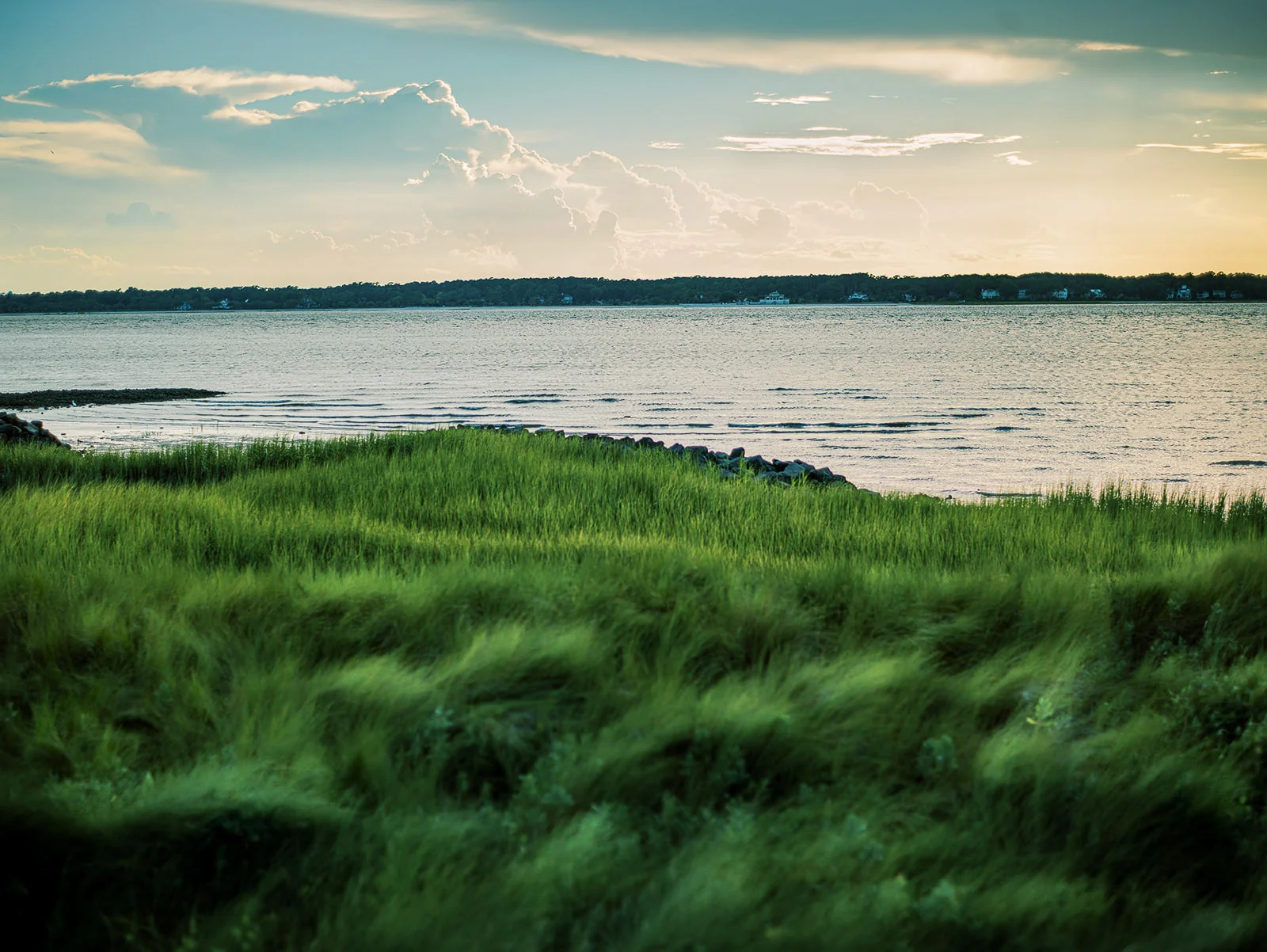
Coastal wall art is everywhere, and most of it could be anywhere. A generic beach, a generic dune, a wave photographed on a coast the buyer will never visit and the seller cannot name. At small sizes that hardly matters. At large scale it matters a great deal, because a big print asks for more than decoration. It asks a viewer to believe in a place.
Unique coastal wall art starts with a specific coast. For Colossus Lux, that coast is the Georgia Lowcountry around Savannah: tidal marsh that changes color by the hour, live oaks, river mouths, barrier island shorelines, and the flat, wide light that comes off the Atlantic in the morning.
Colossus Lux is the fine art practice of Vitor Lindo. The work uses gigapixel photography, stitching hundreds of photographs into single images installed at architectural scale, with prints planned in feet, not inches. On a coastal subject, that detail is what separates a large print you can stand close to from a large print you have to stand back from.
Why specific places read better at large scale
A viewer may not know the name of a marsh creek or a particular stretch of shoreline near Hilton Head, but they can tell when an image has real structure. The tide line is where a tide actually left it. The grasses bend the way coastal grasses bend. The light is consistent across the frame because it was one morning, in one place, not a composite of stock elements.
At six or eight feet wide, those consistencies become visible. So do their opposites. Over processed skies, repeated wave patterns, and colors pushed past anything the coast produces will start to look artificial at exactly the size where the piece was supposed to impress.
If you are choosing coastal wall art for a home you live in year round, specificity has another benefit. The image will still mean something after the novelty of a beach picture wears off, because it is tied to a coast you know, visit, or host guests in.
At large scale it matters a great deal, because a big print asks for more than decoration.
Sizing large coastal wall art for real rooms
Coastal rooms tend to have strong horizontal lines: long sofas, low consoles, wide windows, and open plans that run toward a view. Large coastal wall art should work with that horizontal pull, not fight it.
- Over a sofa or console, a wide panoramic piece usually serves better than a square one.
- In a room with a real water or marsh view, choose art that complements the view in season and light, rather than competing with it at the same brightness.
- In an interior room with no view, a larger piece can carry the sense of coast on its own, and it can be deeper in color.
- In a hallway or stairwell, vertical coastal subjects, such as oaks and dune paths, use height that a panorama cannot.
Extra large coastal wall art, pieces eight feet and wider, needs two checks before printing. First, viewing distance: in most living rooms the main seat is eight to twelve feet from the wall, which supports a large piece well. Second, access: confirm the finished piece can physically get into the room, around corners and through doors, in its final framed or mounted form.
Framed coastal wall art remains the most flexible choice for homes. A simple light wood or pale frame suits bright coastal interiors and lets the image supply the color. A darker frame gives the same shoreline more definition in a traditional room and can be the right call in a study or dining room where the coast should feel more formal.
Contemporary coastal wall art without the cliches
Contemporary coastal wall art is often reduced to a palette: white, sand, and pale blue, with the subject softened until it is almost abstract. That style has its place, especially in rentals and hotels where neutrality is the point. But it is not the only contemporary option.
A sharper approach keeps the subject fully real and lets composition do the modern work: a low horizon with a large area of morning sky, a single line of marsh grass dividing water from land, or a shoreline photographed at blue hour when the colors are deep and limited. These images sit comfortably in modern rooms because their structure is simple, not because their subjects have been blurred away.
For homes on or near the Georgia and South Carolina coast, that honesty also avoids a common problem. Guests who know the Lowcountry recognize when an image is not from here. The palmettos are wrong, the marsh is wrong, the light is from another coast. A photograph made near Savannah or Hilton Head does not have that problem.
You can see the source material in the Lowcountry collection, the Savannah fine art photography page, and the Hilton Head Lowcountry photography page. The Georgia coast first light post describes how several of these images were made, in the early conditions that coastal work depends on.
Color: let the tide and the hour decide
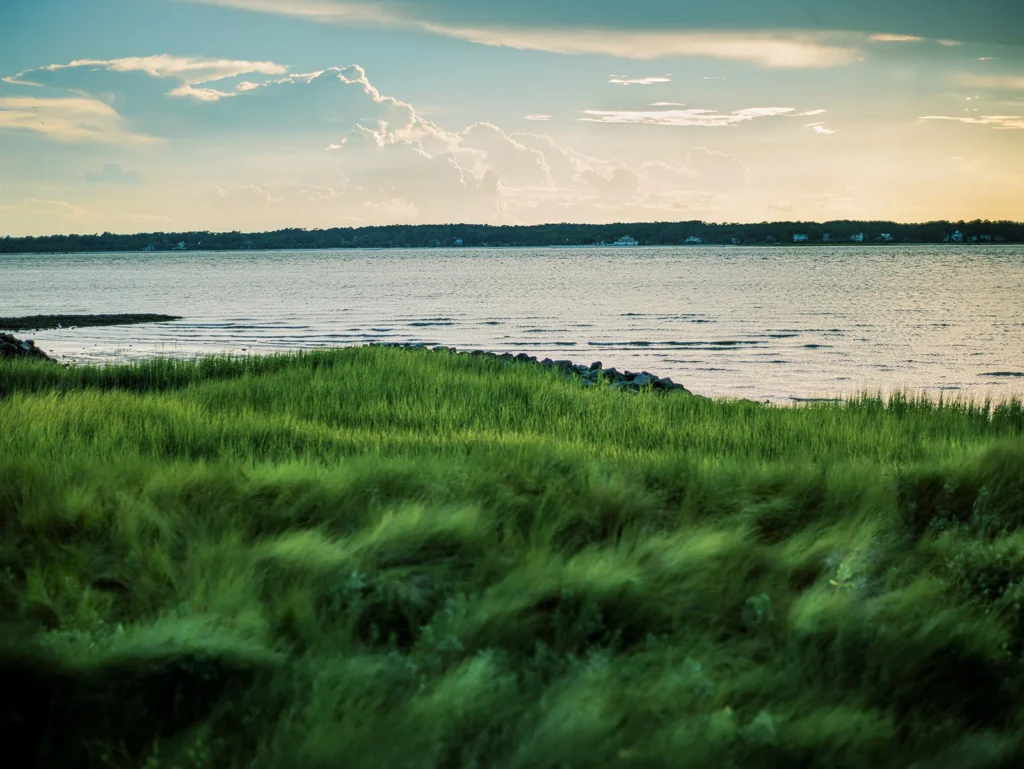
The Lowcountry palette is wider than the usual coastal scheme. A marsh at dawn can hold gold, green, blue, and near black water in a single frame. A shoreline at midday is pale and high key. The same shoreline at last light goes warm and then, quickly, into blue hour.
Choose the hour that suits the room:
- First light for living rooms and bedrooms that need calm and clarity.
- Midday shore images for bright, casual spaces, sunrooms, and pool houses.
- Last light and blue hour for dining rooms, primary suites, and spaces used mostly in the evening.
- Overcast marsh images for rooms with strong color elsewhere, where the art should be quiet.
Hotels, rentals, and second homes
Coastal art is bought for different reasons in a second home, a rental property, and a hotel, and the choice should reflect that.
Owners of second homes usually want recognition: their coast, their light, an image that belongs to the place they return to. Large, specific work serves that best.
Rental properties need durability, cleanable finishes, and images that photograph well in listing photographs. A strong coastal piece over the main sofa does more for a listing than several small generic prints spread through the house.
Hotels near Savannah and the islands need consistency across many rooms, plus one or two feature pieces in public spaces that guests will remember. Gigapixel files help here because the same coastal image can be produced honestly at guest room size and at lobby size, keeping the property visually coherent.
In all three cases, ask whether the file behind the print was made for the size you are ordering, and ask to see detail at full size. Coastal subjects are full of fine edges, in grasses, foam, and distant tree lines, and those edges are the first thing to fail in an over enlarged file.
Living with a large coastal piece
A few practical notes: hang the center of a wide piece at a comfortable standing eye level, then adjust for the furniture below it. Give the piece wall space on both sides. Check glare from windows opposite the wall at the time of day the room is used most. In humid coastal homes, confirm the mounting and backing are suited to the environment, and keep the piece out of direct, sustained sun where possible.
A coast is not a style. It is a place, with its own tide, grasses, and light. Large coastal wall art that starts from a real place, photographed carefully and printed at a size the file can honestly support, will carry a room for years. Generic images fill a wall for a season.
Continue the conversation
If you are choosing coastal work for a home, rental, or hotel near Savannah, or for a coastal room in Metro Atlanta or Atlanta, contact Colossus Lux to discuss their space. Share the wall size and a daylight photograph of the room, and we can talk plainly about which Lowcountry images would hold that wall and which would not.